The Democratic Socialists of America held their biannual convention in Atlanta last weekend. It should have been a tour de force. Some important resolutions were voted, but most of the weekend was spent engaging in procedural bickering.
Last weekend’s convention should have been the DSA’s tour de force. 1, 056 delegates gathered in Atlanta to discuss resolutions and constitutional amendments to the bylaws of the largest socialist organization the U.S. has seen in almost a century. The DSA has elected officials at various levels of government, and socialism (or at least a vague idea of it) has never been so popular. Bernie Sanders is polling in second place in the Democratic Party primaries and DSA member Alexandria Ocasio-Cortez has become one of the most well-known figures in the Democratic Party.
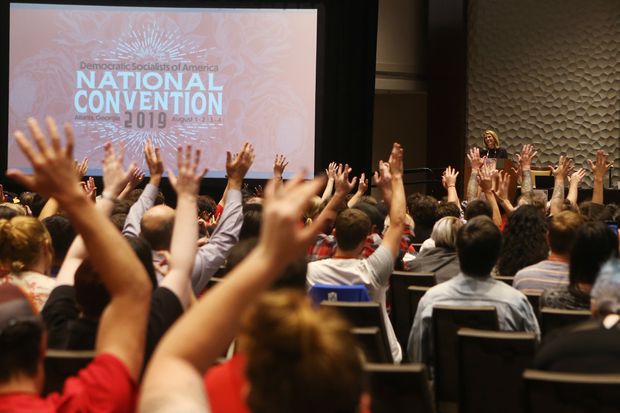
A new generation is awakening to political activity, and many of them are joining the DSA. The convention should have a way to organize thousands of socialists to use their strength to make a concrete plan to fight for immigrant rights, against climate change and against the rise of the right. `
Pittsburgh Democratic Socialists Of America Want To Eliminate Inequality And Empower Workers
Several different reports from convention participants—Dan La Botz in New Politics , Eric Blanc in The Nation and Nathan J. Robinson in Current Affairs —offered positive reviews. In fact, the only critical report was revealed as a ridiculous hoax . But even DSA enthusiast Blanc had to admit, “More than a few frustrated delegates on Friday evening wondered aloud whether the convention might implode from procedural disputes.”
The DSA convention offered hours and hours of internal disagreements obfuscated by procedural and organizational discussions. Hours were taken up by appeals to the nearly incomprehensible Robert’s Rules of Order: points of order, points of information, points of personal privilege, over and over and over. Numerous resolutions were left unaddressed, including one calling for a mass strike for reproductive justice and another preventing police from being part of the DSA. On Twitter, delegates talked about panic attacks, tears, and anger coming from the convention floor.
In a previous article , I wrote about the “tyranny of the procedural.” This concept was very much on display throughout the weekend’s proceedings. Debates on the resolutions were rushed and incomplete. How could they not be? Resolutions were proposed in a vacuum, without a discussion of the broader political context. As Dan LaBotz writes,
The Socialist Movement Is Getting Younger, Thanks To One 75 Year Old
The general organization of the convention unfortunately made it difficult to hold extended political discussion and debate such important issues as the American political scene, DSA’s relationship to the Democratic Party, U.S. foreign policy, or the question of oppressed groups in the United States. The convention was not organized around major political issues but rather around a series of short summary reports, resolutions, and constitutional amendments.
This way of organizing a convention is a disservice to the socialists who put their heart into organizing for socialialist feminism, against imperialism and against climate change. There were some important resolutions addressing these issues, but even those were discussed so quickly that the convention left the DSA unarmed for the fierce battles that are to come, and without a vision of how those battles are part of a broader fight for socialism. I don’t think the DSA is any more prepared to collectively fight against concentration camps or combat white nationalism after the convention than it was before. The convention did not serve as an opportunity for socialists to “sharpen our knives” —as the anthem of the Puerto Rican protests puts it––against our capitalist enemies.

Why so much tension and anger? One DSA member told me: “If you didn’t know the internal politics, the convention was illegible.” The convention was defined by fighting between different caucuses, which I described at length in my previous article . This convention demonstrated the strength of Bread and Roses, known for their reformist, pro-Sanders politics as published in Jacobin and The Call . They are the caucus with the most sophisticated (reformist) political vision.
Solidarity In Bloom
Bread and Roses and Socialist Majority are the two caucuses who are most enthusiastic about electoral politics inside the Democratic Party, with Bread and Roses committed to a “dirty break” sometime in the distant future and members of Socialist Majority are opposed even to this. Both want a more centralized organization with a stronger focus on national priorities—such as campaigning for Bernie Sanders. Bread and Roses was able to get nearly all of their proposals passed and the people favoring a more centralized DSA won a majority on the National Political Committee.
At the convention, the central fissure was between these two caucuses and Build, the “non-caucus caucus” which claims that it doesn’t have an ideological stand. Build, alongside the Libertarian Socialist Caucus (LSC), clearly favored a more decentralized organization with a focus on mutual aid and “base-building”—although they do not oppose doing electoral work for Demcratic Party candidates.

On Twitter and in person, one caucus blamed the other for purposely “filibustering” the convention, delaying and preventing some resolutions from being brought to a vote. At the convention, organizational questions served as proxies for political questions. The caucuses’ different political visions for the DSA were never clearly discussed.
Democratic Socialists Of America Make A Strategy For The Biden Era
Supporters of Build and LSC favor decentralization for ideological reasons, but I don’t think that is the only issue for folks in the decentralization camp. Many people in Build and the LSC are uncomfortable with the electoral orientation of the DSA, but rather than exploring this vision more openly, the discussion became one of centralization versus decentralization. In part because Build hasn’t put forward an alternative political and ideological vision, they cannot offer a comprehensive alternative orientation for the whole DSA. Instead, they propose decentralization in order to be able to pursue their politics on a local level. However, most decentralization proposals failed at the convention and an opportunity was missed to discuss real differences in political vision and orientation.
The convention voted for several resolutions that were quite left. For instance, delegates voted overwhelmingly to support open borders, with almost 80 percent in favor of the proposal in preliminary voting. They voted in favor of resolutions for the decriminalization of sex work, to create an anti-fascist working group and in support of anti-imperialism and decolonization. The DSA also passed a number of resolutions about orienting towards the unionized and non-unionized working class (although with a glaring lack of discussion of the union bureaucracy).

Not a single speaker at the convention questioned the strategy of working within the Democratic Party. However, there were various attempts to rectify and contain the contradictions of this orientation. The “Bernie or Bust” resolution committed the DSA to refrain from endorsing any Democratic Party candidate other than Sanders—not even Elizabeth Warren who has taken up much of Bernie’s platform. They voted to endorse candidates who engage in “class struggle elections” and that the national DSA will only endorse “open socialists”—i.e. only people who call themselves socialists. (As New York City’s millionaire “democratic socialist” Cynthia Nixon demonstrates, that can be a pretty low bar.) Numerous resolutions voted on at the convention were to the left of Bernie Sanders, including ones on sex work, foreign policy, and immigration. Some resolutions explicitly called on the DSA to appeal to Sanders to reconsider his positions.
The Dsa Convention In Chicago Showcases Splinters Among A Growing, Unruly Left
One of the most contentious resolutions—and the one which most highlighted the differences between the caucuses—was called “Pass the Hat.” This proposal would have committed $100 to each chapter every month, and it was heavily supported by Build and the LSC. Whether or not one agrees with Build’s vision of decentralization, the testimonials from comrades in small chapters were shocking. They spoke of paying dues while seeing none of that money, nor any support from the national organization. One comrade from Mississippi spoke about white nationalists showing up to a reading group with guns, and how even $100 from the National could mean a safer meeting space. But with many arguing that these $100 payments could bankrupt the organization, the measure failed to pass. Indeed, none of the decentralizing measures proposed by Build and the LSC passed.
On the other hand, the campaign to support Sanders is quite well-organized and funded: in fact the DSA is hiring a full time staff person to oversee the Sanders work and two more to oversee electoral work. No other aspect of the DSA’s outward facing political orientation has a dedicated paid position.

If comrades attended the convention in hopes of organizing a national mass movement around issues like closing the concentration camps or reproductive justice, the convention failed to serve that purpose. Indeed, given the way the convention was organized I’m not sure there was ever a chance of this, even without all the procedural maneuvering. There wasn’t even a discussion of the proposal to organize a mass strike for reproductive justice, for instance, because it was too far down on the agenda.
National Convention Timeline
While some very important and very left resolutions were voted, in order to make those resolutions a reality, the 1, 036 delegates who attended would need to feel ownership of the resolution, and clarity about how they could bring those ideas to coworkers, neighbors and friends. In

Posting Komentar untuk "Democratic Socialist Of America National Convention"