Latin America’s largest airline LATAM Airlines Group SA said on Tuesday the company and its affiliates in Chile, Peru, Colombia, Ecuador and the U.S. have filed for Chapter 11 bankruptcy protection in the U.S.
LATAM is the latest corporate victim of the coronavirus pandemic that has brought a virtual halt to air travel, joining Colombia’s Avianca Holdings SA and Australia’s Virgin Australia Holdings Ltd in bankruptcy protection as it seeks to restructure its debt.

“We have implemented a series of difficult measures to mitigate the impact of this unprecedented industry disruption, but ultimately this path represents the best option, ” LATAM CEO Roberto Alvo said in a statement.
Latam Air Flight Plunge Might Have Been Caused By A Mistake In The Cockpit, Wall Street Journal Reports
The airline will continue to fly while it is in bankruptcy protection and its affiliates in Argentina, Brazil and Paraguay were not included in the Chapter 11 filing.
U.S. carrier Delta Air Lines Inc is the biggest shareholder in LATAM, having last year paid $1.9 billion for a 20 percent stake during better times for the industry.
LATAM said it had secured funding from other major shareholders, including the Cueto and Amaro families and Qatar Airways, to provide up to $900 million in debtor-in-possession financing.
Delta Air Lines Campaign Aims To Inspire South American Travelers To 'see Beyond, Go Up'
“To the extent permitted by law, the group would welcome other shareholders interested in participating in this process to provide additional financing, ” the airline said, adding it had about $1.3 billion in cash on hand.
LATAM listed assets and liabilities in the range of $10 billion and $50 billion, according to a filing with the U.S. Bankruptcy Court in Southern District of New York. The airline was downgraded by S&P and Fitch on Friday after the company confirmed it did not pay interest and principal on three tranches of 2015 $1 billion enhanced equipment trust certificates.
LATAM, formed when Chile’s LAN merged with Brazil’s TAM in 2012, said its Brazilian affiliates are in discussions with the Brazilian government about the next steps and financial support for operations in the country.
Latin American Route Updates
This article was from Reuters and was legally licensed through the NewsCred publisher network. Please direct all licensing questions to [email protected] .No part of the world is seeing as many big changes to the airline business as Latin America. The final shape is still opaque, but one thing is clear for the region's aviation industry: All eyes are watching closely for how this transformation unfolds.
Twelve minutes. That’s all the time it took for the board of directors of Avianca, the second largest airline in Latin America, to set the fate of the carrier and begin a series of sweeping changes to the airline industry in the region.
The date was May 10, 2020. It was a partly cloudy spring Wednesday in Bogotá, where Avianca is headquartered. The weather, however, was likely of little consequence to the board that met via teleconference to decide the airline’s fate at 8:03 a.m. local time. Dialing, or Zooming possibly, in were its 10 directors, including then chief financial officer and now CEO Adrian Neuhauser.
America's Airlines: Something In The Air
In front of them was a momentous decision: Whether or not to take Avianca into bankruptcy given, as minutes from the meeting show, the airline’s cash flows were “severely impacted by the effects of the Covid-19 pandemic.” If they voted yes, it would be the largest airline bankruptcy to that point in the crisis.
All of the facts in front of the board pointed to a yes vote. Global air travel was a month off its pandemic nadir in April 2020. Airspace in Colombia, Avianca’s largest market, had been closed since March 20, and the airline’s flights suspended since March 25. And then there was the “uncertainty caused by the limited visibility that the industry [had] with respect to the demand recovery.”

Just over a month earlier, then director general of industry trade group the International Air Transport Association (IATA), Alexandre de Juniac, had warned that, without government aid to get through the liquidity crisis facing airlines, the industry would “run out of cash and over half the [airlines] die.”
Copa Airlines Recognized For Fifth Consecutive Year As The Most Punctual Airline In Latin America By Flightstats And Oag
And the Colombian government, as well as every other government in Latin America, had to that May morning declined to provide any aid to the region’s airlines.
By 8:15 a.m. it was done: The board voted to take Avianca into Chapter 11 and the meeting was adjourned. By 1 p.m. that day, the airline had filed the necessary documents with the court in New York and it was officially bankrupt.
“When we did it, we saw no other viable path, ” Neuhauser said with the benefit of hindsight at the annual meeting of the region’s aviation trade group, ALTA, in Buenos Aires this October. “In retrospect, it allowed us to survive. It gave us time to breathe. It gave us time to reflect on who we are and why we do what we do.”
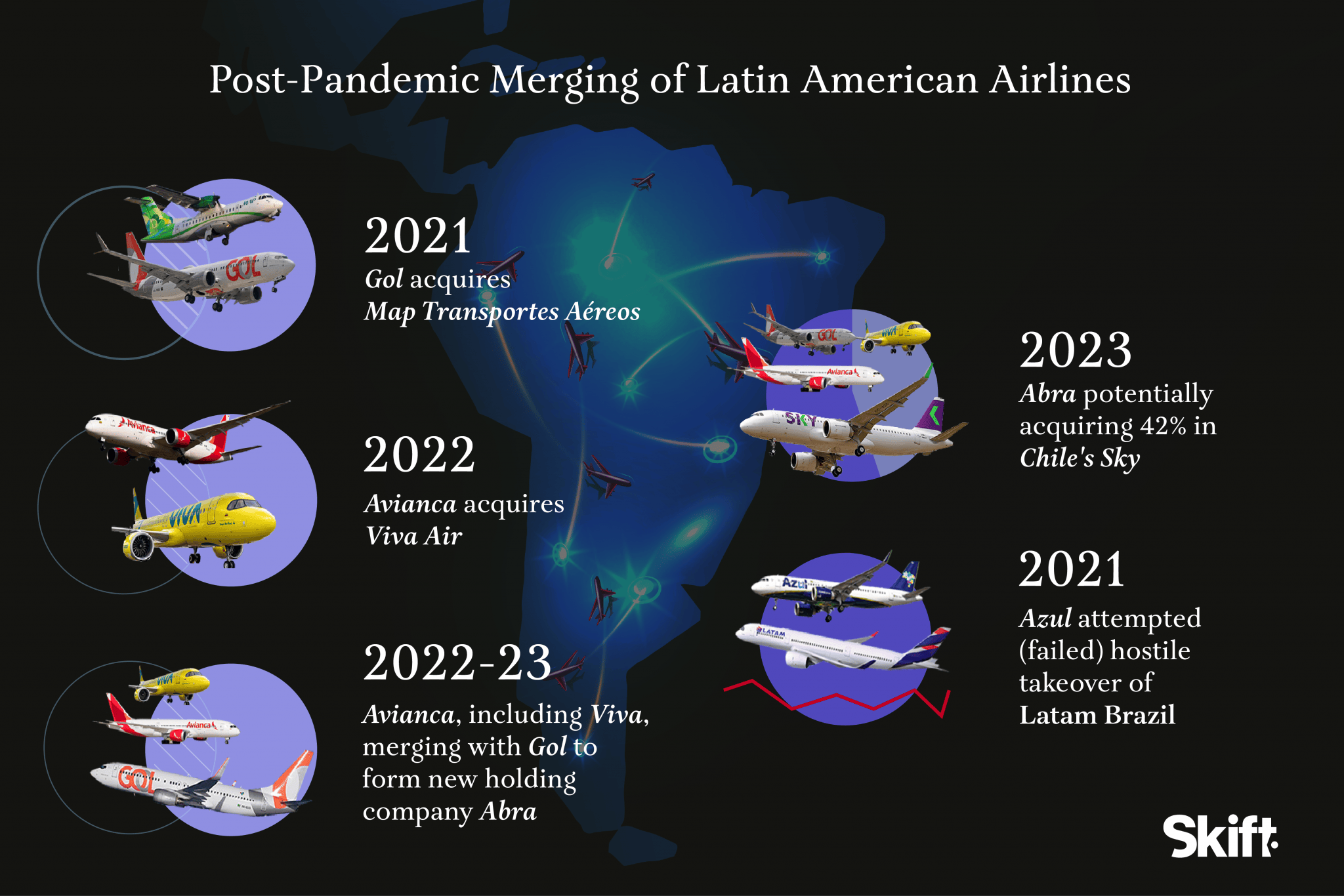
Traveling Across Latin America? Good News: Colombia's Avianca Hopes To Merge With Low Cost Airline Viva
Avianca was the first airline domino to fall in Latin America during the pandemic. The region’s largest carrier, Latam Airlines Group, would follow it into Chapter 11 on May 26, and Aeromexico on June 30, confirming de Juniac’s warning that airlines would collapse. But bankruptcy was not the death of these carriers, far from it.
Latin America is emerging as the most dynamic region in the global airline industry, a market through history that has been subject to the varying political and economic instabilities from country to country.

Today billions of dollars in fresh investment, including from a slew of new investors, is pouring in. Consolidation is rife. All of this change is creating very real, and new, opportunities for budget airlines and startups alike. The endgame from all this disruption is still unclear, of course, but make no mistake: Latin America is captivating the attention of aviation around the world.
The Largest Air Carrier In Latin America Just Filed For Bankruptcy
(For more on Latin America’s aviation industry, be sure to attend Aviation Forum on November 16 where a session is entitled “What Comes Next for Latin America?”)
Airlines in Latin America were struggling before the pandemic. The industry had racked up a combined $2.2 billion in losses from 2015 through 2019, according to data from IATA. When revenues dried up and many airlines saw “negative bookings” — when there are more cancellations than new reservations — early in the pandemic, the resulting liquidity crisis proved the breaking point for many carriers.
In their initial bankruptcy filings, Aeromexico, Avianca, and Latam all cited a liquidity crunch with, as Avianca put it, “no end in sight.” Each also mentioned the lack of government support as a contributing factor, though none highlighted it as a reason for their respective bankruptcies.
Boeing Tells Pilots To Check Seats After Latam Plane Incident
“Airlines had to bear the brunt, ” Peter Cerda, the regional vice president of the Americas at IATA, said of the lack of state support for the industry in the region.
This was not necessarily a surprise. Air travel in many Latin American countries has long been viewed — incorrectly — as the domain of the rich and, as such, governments have hesitated to appear as subsidizing the airline industry. Of course exceptions exist, most notably state-owned Aerolineas Argentinas; all of the major Latin American airlines, including the three that went through bankruptcy, were privatized decades ago. These views, as far as airline executives are concerned, contribute to government policies — from heavy taxation to failure to invest in airport facilities — that the industry argues limits its ability to expand.

At the same time, each bankrupt legacy airline faced increasing pressure from budget competition. Viva Aerobus and Volaris were eating into Aeromexico’s home market; Viva Air was doing the same to Avianca in Colombia; and a combination of JetSmart and Sky Airline to Latam in Argentina, Chile, and Peru.
Eleven Airlines Have Gone Bankrupt In Latin America Since 2020
And, conflating the issues facing Latin American airlines, was the industry’s fragmentation. Aside from market leader Latam that was formed by the merger of Lan Airlines and Tam Airlines in 2012, no one carrier had more than a 13 percent share of passenger capacity — Gol in Brazil — and most had shares smaller than 8 percent in 2019, according to Diio by Cirium schedules.
Larger airlines with more scale are typically healthier and, important to travelers, grow faster than their peers in more fragmented markets. This has proven true in the U.S. and Europe where consolidation has created financially stronger airlines and airline groups, as well as sustained growth.
Bankruptcy, as Neuhauser put it in October, was an opportunity for Latin America’s three largest legacy airlines to take a step back, restructure, and refocus on who they are. And, in Avianca’s case, that meant beating discount competitors at their own game.
British Airways Owner Finds South America Business Travel Outpacing North Atlantic
“Staying independent in aviation in the 2020s is not an option. It was hard pre-pandemic. It’s not an option now.”Viva Air CEO Felix Antelo
Avianca CEO Neuhauser, in several conversations over the past year, has repeatedly highlighted the changes in the Colombian market. Growth, he has said, was in expanding the pool of flyers — converting bus riders to planes, for example — rather than doubling down on the airline’s traditional corporate and upper middle class segments. And, to tap this market, Avianca had to cut costs, become more flexible, and adopt an a la carte pricing structure with cheaper fares and lots of fees.
“We exist to serve the region we

Posting Komentar untuk "Latin America Airlines News"