News Release Latest Federal Data Show That Young People Are More Likely Than Older Adults to Be Experiencing Symptoms of Anxiety or Depression Americans’ Mental Health Continues to Be A Concern as Many People Try to Move Beyond the Pandemic
Young adults in the United States continue to be more likely than their older counterparts to be experiencing symptoms of anxiety or depression, according to the latest federal data analyzed by researchers.

The analysis of the Census Bureau’s Household Pulse Survey finds that half (50%) of adults ages 18-24 reported anxiety and depression symptoms in 2023, compared to about a third of adults overall. The data also show that young adults are more likely than adults of any other age group to experience mental health symptoms.
The Prevalence Of Climate Change Psychological Distress Among American Adults
Many young adults have come of age in an era of pandemic-related school closures, remote work and job and income loss, all of which may contribute to poor mental health. Additionally, young adults in college settings may encounter increased difficulty accessing treatment.
But young adults are not alone in experiencing heightened mental health symptoms. The mental health and substance use concerns that were present during the COVID-19 crisis continue to affect many Americans, even as many people try to move beyond the pandemic, Census data show.
Nearly 4 in 10 (39.3%) adults reported symptoms of anxiety or depression in February 2021, compared to 32.3 percent in 2023. A /CNN survey in October 2022 found that 90 percent of the public believes there is a mental health crisis in the U.S..
Serious Depression, Anxiety Affect Nearly 4 In 10 Worldwide
Poor mental health has also been more pronounced among adolescent females during the pandemic, with 57 percent reporting feelings of hopelessness and sadness compared to 29 percent of their male peers in 2021, the latest such data available. In the same period, 30 percent of adolescent females reported that they seriously considered attempting suicide, compared to 14 percent of adolescent males.
Additionally, drug overdose deaths have sharply increased during the pandemic. According to Centers for Disease Control and Prevention data, in 2021 there were over 106, 600 deaths due to drug overdose in the U.S. — the highest on record. This spike in deaths has primarily been driven by substances laced with synthetic opioids, including illicitly manufactured fentanyl.
Here again young people especially have been affected. Research suggests that while substance use among adolescents has declined, drug overdose deaths have sharply increased among this population, primarily due to fentanyl-laced substances. Among adolescents, drug overdose deaths have more than doubled from 2019 (282 deaths) to 2021 (637 deaths). Male, Black, and Hispanic youth have experienced the highest increases in deaths due to drug overdose.
Prevalence Of Anxiety, Depression, Mania, Insomnia, Stress, Suicidal Ideation, Psychotic Experiences, & Loneliness In Uk University Students
The analysis details several changes in the delivery of mental health and substance use services that have been implemented since the onset of the pandemic, including the growth of telehealth, steps to improve access to treatment for opioid use disorders, expansion of school-based mental health care, and the rollout of the 988 national suicide prevention and crisis line.Generalized anxiety disorder (GAD) is characterized by excessive worry that is difficult to control accompanied by physical symptoms including restlessness, being easily fatigued, difficulty concentrating, irritability, muscle tension, or sleep disturbance (1). The GAD–7 scale is a validated brief self-report measure to screen for GAD and assess the severity of symptoms (2). Adults with GAD–7 scores of 0–4 are considered to have no or minimal symptoms of GAD, while those with scores of 5–9, 10–14, or 15–21 are considered to have mild, moderate, or severe symptoms, respectively (2). This report examines the percentage of adults aged 18 and over who experienced symptoms of anxiety in the past 2 weeks, by severity of symptoms and select demographic characteristics, using the GAD–7 scale.
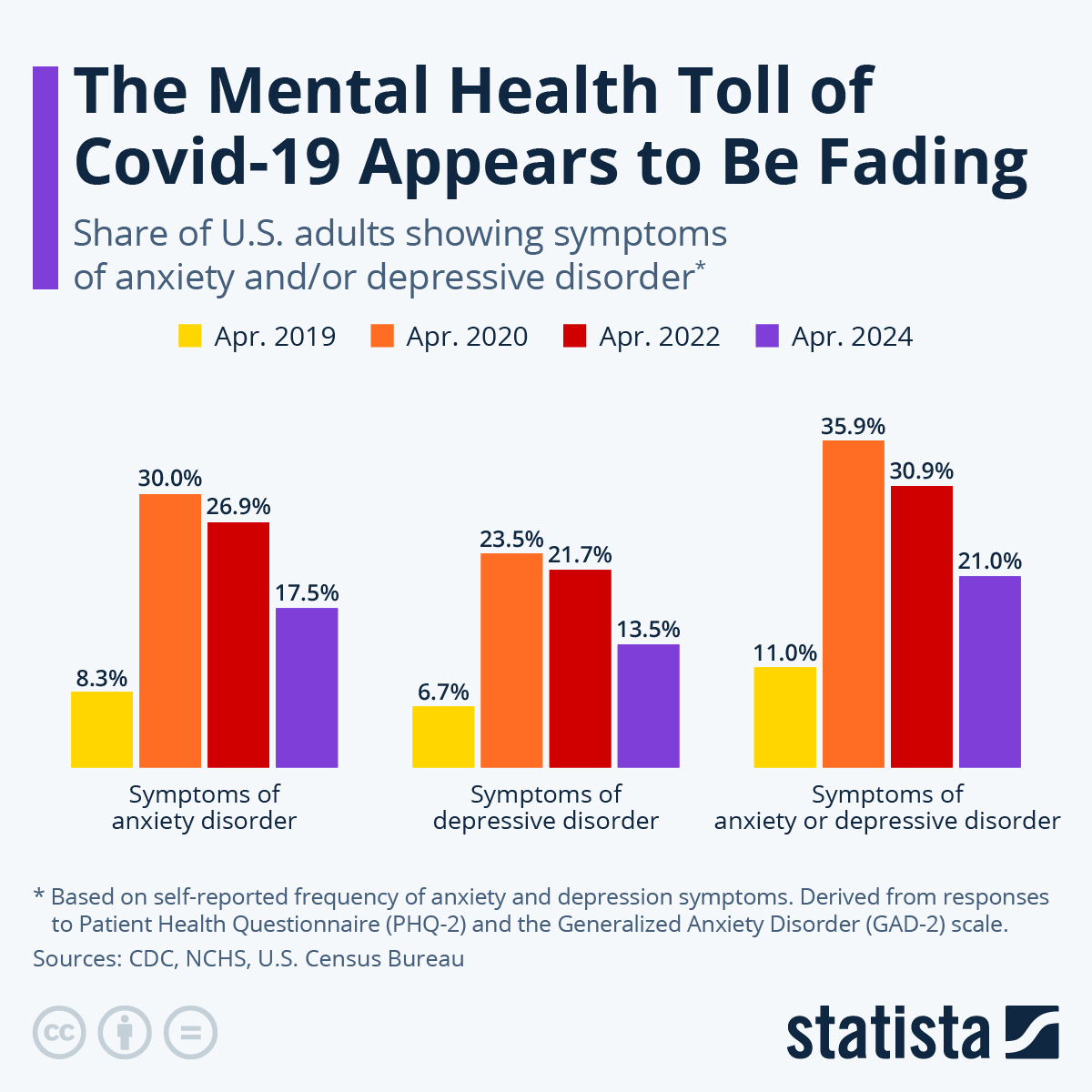
Figure 1. Percent distribution of severity of anxiety symptoms in the past 2 weeks among adults aged 18 and over: United States, 2019
NOTES: Severity of anxiety symptoms was based on the seven-item Generalized Anxiety Disorder scale (GAD–7) and summarized into none or minimal (values 0–4), mild (values 5–9), moderate (values 10–14), and severe (values 15–21). Estimates are based on household interviews of a sample of the civilian noninstitutionalized population. Access data table for Figure 1pdf icon .
A Third Of Americans Now Show Signs Of Clinical Anxiety Or Depression
Figure 2. Percentage of adults aged 18 and over who experienced symptoms of anxiety in the past 2 weeks, by symptom severity and age group: United States, 2019
NOTES: Severity of anxiety symptoms was based on the seven-item Generalized Anxiety Disorder scale (GAD–7) and summarized into none or minimal (values 0–4), mild (values 5–9), moderate (values 10–14), and severe (values 15–21). Those categorized as having no or minimal symptoms of anxiety are not shown in this figure. Any severity includes those categorized as having either mild, moderate, or severe symptoms of anxiety in the past 2 weeks. Estimates are based on household interviews of a sample of the civilian noninstitutionalized population. Access data table for Figure 2pdf icon .

Figure 3. Percentage of adults aged 18 and over who experienced symptoms of anxiety in the past 2 weeks, by symptom severity and sex: United States, 2019
Mental Illness: Estimated Cases
NOTES: Severity of anxiety symptoms was based on the seven-item Generalized Anxiety Disorder scale (GAD–7) and summarized into none or minimal (values 0–4), mild (values 5–9), moderate (values 10–14), and severe (values 15–21). Those categorized as having no or minimal symptoms of anxiety are not shown in this figure. Any severity includes those categorized as having either mild, moderate, or severe symptoms of anxiety in the past 2 weeks. Estimates are based on household interviews of a sample of the civilian noninstitutionalized population. Access data table for Figure 3pdf icon .
Figure 4. Percentage of adults aged 18 and over who experienced symptoms of anxiety in the past 2 weeks, by symptom severity and race and Hispanic origin: United States, 2019
NOTES: Severity of anxiety symptoms was based on the seven-item Generalized Anxiety Disorder scale (GAD–7) and summarized into none or minimal (values 0–4), mild (values 5–9), moderate (values 10–14), and severe (values 15–21). Those categorized as having no or minimal symptoms of anxiety are not shown in this figure. Any severity includes those categorized as having either mild, moderate, or severe symptoms of anxiety in the past 2 weeks. Estimates are based on household interviews of a sample of the civilian noninstitutionalized population. Access data table for Figure 4pdf icon .

The State Of Mental Health In America
During 2019, about one in six (15.6%) adults aged 18 and over experienced symptoms of anxiety in the past 2 weeks that were either mild (9.5%), moderate (3.4%), or severe (2.7%). Severity of symptoms of GAD differed by sociodemographic characteristics. The percentages of adults with mild, moderate, or severe symptoms of GAD in the past 2 weeks decreased with age and were higher among women than men. Non-Hispanic white adults were the most likely and non-Hispanic Asian adults were least likely to have experienced mild, moderate, or severe symptoms of GAD compared with the other race and Hispanic-origin groups examined.
The GAD–7 scale is a validated brief self-report measure which was developed to screen for GAD and assess the severity of its symptoms (2). A score of 10 or higher, corresponding to moderate and severe symptoms of GAD, may suggest the presence of a clinically significant anxiety condition that warrants further evaluation, including a diagnostic interview and mental status examination by a mental health professional (2, 3). This report showed that 6.1% of adults scored 10 or higher on the GAD–7 scale.
Race and Hispanic origin: Based on responses to two questions that determine Hispanic or Latino origin and race. Adults categorized as Hispanic may be of any race or combination of races. Adults categorized as non-Hispanic white, non-Hispanic black, and non-Hispanic Asian indicated one race only.
Anxiety In Teens Is Rising: What's Going On?
Severity of generalized anxiety disorder (GAD) symptoms: Based on the Generalized Anxiety Disorder scale (GAD–7) and summarized into no or minimal (values 0–4), mild (values 5–9), moderate (values 10–14), or severe (values 15–21) symptoms of GAD (2). Sample adults were asked how often they have been bothered by the following symptoms in the past 2 weeks: “Feeling nervous, anxious, or on edge;” “Not being able to stop or control worrying;” “Worrying too much about different things;” “Trouble relaxing;” “Being so restless that it’s hard to sit still;” “Becoming easily annoyed or irritable;” and “Feeling afraid as if something awful might happen.” Response options were “not at all, ” “several days, ” “more than half the days, ” and “nearly every day, ” scored as 0 to 3 points, respectively, and then summed into a total score. Sample adults with two or more GAD–7 questions answered as “refused” or “don’t know, ” or whose answers were not ascertained, were not included in this analysis.

Data from the 2019 National Health Interview Survey (NHIS) were used for this analysis. NHIS is a nationally representative household survey of the civilian noninstitutionalized U.S. population. It is conducted continuously throughout the year by the National Center for Health Statistics (NCHS). Interviews are conducted in respondents’ homes, but follow-ups to complete interviews may be conducted over the telephone. For more information about NHIS, visit https:///nchs/nhis.htm.
Point estimates and the corresponding confidence intervals for this analysis were calculated using

Posting Komentar untuk "Anxiety Disorder Rates In America"