USD to INR Exchange Rate History? The US dollar is the most widely used money in the world. The value of other currencies in the worldwide market is determined by the value of the US dollar, which is considered the benchmark currency.
The US dollar is also one of the most widely utilised international investment and trade currencies. The USD is far easier to trade than any other currency. Since then, the dollar has gotten a lot of attention worldwide. In light of this, the INR currency, like many others, is valued by comparing it to the dollar. The history of the INR, on the other hand, aids in a better knowledge of the Indian economy.
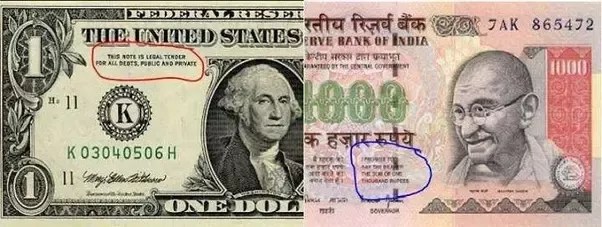
. We’ve come up with a precise response that clears the haze surrounding this old subject. It’s nothing more than a legend. If you believe that exchanging one dollar for one rupee in 1947 would have resulted in precisely one rupee, you are mistaken. You might wonder why. Here’s the solution:
Rupee Vs Us Dollar: Inr Opens At A One Month High Versus Usd
Although, after Independence, the Indian rupee was pegged to the British Pound at a rate of 1 rupee = 1 shilling and 6 pence, which translates to 13 1/3 rupees per British Pound. However, according to reports, the British Pound would have been worth around 4 USD at the time, implying that the US dollar would have been worth more than Rs 3.
In 1950, India became a republic. In 1952, India’s constitution came into being. 1 USD was equal to 4.16 INR or 4.16 NCU at the time. (The NCU stands for National Currency Unit.)
USD to INR Exchange Rate was large before India’s Independence in 1947; the Indian currency was first assessed against the US dollar. Given that the national balance sheet was devoid of any credit or debit, it could equate the value of 1 INR to 1 USD.
American Dollar Pakistani Rupee Money Exchange Banknotes Pack Bundle Concept Stock Video Footage By ©skorzewiak #536053548
The value of Indian money, on the other hand, was taken from the British Pound, which was worth 13 INR at the time. Because there was no conventional form of currency comparison until 1944, the INR’s value against the British Pound remained dominant.
In 1947, 1 INR was worth 4.76 rupees (if a direct comparison is not made). Maintained this value until 1966. However, beginning in the 1950s, the Indian economy began to deteriorate. It was because of the country’s international creditworthiness.
The situation was made worse by the 1962 conflict between India and China, followed by the 1965 war between India and Pakistan, and the drought that ravaged the country in 1966. By 1967, all of this had pushed the exchange rate to INR 7.50.
Inr Usd Exchange Rate Today America Dollar Indian Rupees Currency Change Rate 25 May 2022 Hundred India Rupees 129 Usd
The rupee value decreased to 8.10 in 1974 due to the 1973 Oil Shock, caused by the Organization of Arab Petroleum Exporting Countries’ decision to reduce output.
To deal with the problem and the ensuing political turmoil, India borrowed foreign currency, causing the Indian currency to depreciate. Throughout the 1980s, the exchange rate declined, reaching a peak of 17.50 in 1990.
In the 1990s, India’s economy was undergoing a difficult period. At the time, interest payments accounted for 39% of the government’s revenue. The fiscal deficit has shrunk to 7.8% of GDP, and India is the verge of defaulting on its debt obligations.
American Dollar V/s Indian Rupee
The Indian currency had to be devalued as a result of the crisis. Devaluation is when a country’s currency loses value in the international market while maintaining its internal worth. India followed a similar method to reduce the cost of its export market while increasing the cost of its import market.
In 1992, the devaluation changed from 1 USD to 25.92 INR. Since then, the value of the Indian rupee has fallen to the current rate of 74.57 INR. In 2004, the dollar price was 45.32 INR, and it grew to 62.33 INR during the next ten years. In 2016, February saw the highest dollar-to-INR exchange rate at 68.80 INR.

The current exchange rate for one US dollar is 74.57 Indian rupees. The price of crude oil mainly determines the value of the INR. As the oil price rises, so does the value of the Indian rupee, and vice versa. Another factor is the retreat of foreign investors from the Indian market. Investors may lose interest in the country’s market due to government debt, resulting in inflation.
Usd To Inr Exchange Rate History Since 1947
The currency benefits from increased exports, but if the country’s vaccination goals continue to fall and different agencies impose more limitations, it could jeopardise its economic prospects.
According to the Ministry of Commerce and Industry, India’s trade imbalance increased from $9.76 billion in February to $14.11 billion in March. Non-petroleum sales increased by 58.2 per cent year over year, bringing exports to an all-time high of $34 billion. Imports increased by 52.9 per cent on an annualised basis to $48.12 billion, a record high.
On March 26, the Reserve Bank of India’s (RBI) foreign exchange reserves fell below $580 billion. It’s down from $582.27 billion the week before. Forex reserves have been slowly improving over the last 18 months after dropping below $400 billion in 2019.
American Dollars Surrounding Indian Rupee Banknote Stock Image
the benchmark rate will stay at 4%, while the reverse repurchasing agreement rate will continue at 3.35 per cent. Despite investors pouring through the numbers, the global financial markets are focused on the spike in new COVID-19 infections.
To summarise, we believe that most of the variables, at least the fundamental ones, will make it difficult for the RBI to keep the rupee at present levels. It will rely heavily on the economy’s recovery and the effective combat of the pandemic.

Our judgement of the situation is simple: if the new vaccine efficiently combats the pandemic, it will be the most significant element supporting the economy and the rupee in the months ahead. Given the mixed results, it’s challenging to create a fair, reasonable estimate. We estimate the rupee to move in a 72.70-74.50 range this year, with the RBI employing its vast reserves to halt or prevent any further decline beyond that level.
Us Dollar To Indian Rupee Today And In 1947
Currently, the INR is worth less than the USD; however, this was not always the case. The scenario was substantially different when India gained Independence in 1947. It is thought that 1 INR equalled 1 USD in the past. There are numerous theories on why the 1 Dollar rupee had a higher value in 1947. The most prevalent explanation is that there was no metric system; hence all currencies were equal in value.
Another argument is that because India was a British-ruled country before 1947, the INR had a higher worth because the Pound had a higher value. In 1947, one Pound was thought to be worth 13.37 rupees; hence the value of the US dollar should have been INR 4.16.
The story began in 1944 when we signed “The Britton Woods agreement. This agreement decided the value of every currency in the world. During India’s Independence, everyone was gradually adjusting to it. Since 1947, when India gained Independence, the value of the rupee has steadily declined.
Indian Rupee American Dollar Background Stock Photo 673769224
According to the modern metric system, the value of INR to USD in 1913 should be 0.09, and if we stick to the 1 USD = 1 INR argument, the value of INR to USD increased up to 3.31 in 1948, 3.67 in 1949, and 7.50 in 1970.
1 INR was never equal to 1 USD, according to official data. It was forced to join the international metric system, which caused the rupee’s value to fluctuate simultaneously when India obtained Independence.

Since its Independence, the Indian Rupee has been subjected to several events that have lowered its value. Multiple economic crises, privatisation, devaluation, and World Bank loans have all played a role in deciding the value of 1 USD to INR.
Rupee Vs Dollar: Indian Currency Falls 14 Paise To 81.81 Against $
The federal funds rate in the United States has remained unchanged at 0.25 per cent for the last ten years, including the Great Recession of 2008. It also influences the current exchange rate of INR to USD.
In 1957, the decimal system was implemented. The Indian rupee was divided into 100 naye paisas (new paisas in Hindi/Urdu). The prefix naye was dropped, but the value remained the same.
The money was made accessible to every Indian resident by making the lower denominations an amount of Indian currency, but it also boosted the value of the INR.
Mumbai India Asia May 02 2021 Franklin Us 100 Dollar Bill Close Up, Usa Federal Fed Reserve Note Fragment. American Dollar Is The Official Currency Stock Photo
India was still a developing economy at the time. In such conditions, it is projected that India will import more than it exports. Many attempts were made to maintain a favourable trade balance, but they failed. Since the 1950s, India has experienced a continuous balance of payments deficit. The devaluation of 1966 resulted from the government’s first severe financial crisis.
India is involved in two major wars with China and Pakistan. After Pandit Jawaharlal Nehru, India’s leadership changed several times. Another reason contributed to the rupee’s 57 per cent depreciation, bringing the exchange rate to Rs 7.5/$.

It was a significant factor in lowering the INR to the USD exchange rate. Inflation drove up Indian prices, and the exchange rate skyrocketed. (See also: 8 Countries Where the Rupee Is King.)
What Is Rs. 1,000 Crores In Usd?
1991 is regarded as the year of financial change In India. Indian economists acknowledged the importance of liberalisation in 1991. This change was part

Posting Komentar untuk "America Dollar To Indian Rupees"