Legal recognition of the parent-child relationship (parentage) is important for many reasons, from healthcare decisions and school settings to economic security, everyday life, and much more. But for both LGBTQ and non-LGBTQ people alike, families are made in many different ways, and so there need to be multiple ways for the parent-child relationship to be legally secured. These maps illustrate some of the pathways to parental recognition that are especially important for LGBTQ families. There are multiple types of adoption that can either establish a legal relationship between parent and child, formally confirm such a relationship, or both. Stepparent adoption is available in every state to someone who is married to a child’s legal parent; as a result of marriage equality, this type of adoption is available to married same-sex couples nationwide. A co-parent or second-parent adoption is available in some, but not all, states, and it does not require the parents to be married. Separately, a confirmatory adoption is a streamlined adoption process established by law to confirm a parent's existing legal relationship to a child. Click Citations & More Information for more details about each of these types of adoption.
See also MAP’s June 2023 report, Relationships at Risk: Why We Need to Update State Parentage Laws to Protect Children and Families, for further discussion of the importance of legal recognition of parent-child relationships, the many pathways to legal recognition of parentage, recent examples of modernized parenting laws, and policy recommendations for all states.
*Note: These percentages reflect estimates of the LGBTQ adult population living in the 50 states and the District of Columbia. Estimates of the LGBTQ adult population in the five inhabited U.S. territories are not available, and so cannot be reflected here.
Movement Advancement Project
Legal recognition of the parent-child relationship (parentage) is important for many reasons, from healthcare decisions and school settings to economic security, everyday life, and much more. But for both LGBTQ and non-LGBTQ people alike, families are made in many different ways, and so there need to be multiple ways for the parent-child relationship to be legally secured. These maps illustrate some of the pathways to parental recognition that are especially important for LGBTQ families. This map shows the states in which all intended parents, regardless of marital status, can be recognized as legal parents if they consent to assisted reproduction with the intent to parent the child. For example, when a woman consents to have a child with her wife through donor insemination, the non-gestational, non-genetic mother is also a legal parent (just as a woman’s husband would be a legal parent of a child they have using donor insemination, even though he is not the genetic father). These laws are often referred to as assisted reproduction statutes or intended parent provisions. While most states have statutes specifically governing the parentage of children born through assisted reproduction, most of these statutes only apply to married couples. This map shows states that have expanded assisted reproduction statutes to apply regardless of the marital status of the intended parents. (Note: this map does not refer to laws governing surrogacy.)
Please note that this map does NOT refer to laws about surrogacy. This map is not legal advice. Even if assisted reproduction laws do not exist or apply, other laws may protect married or unmarried parents, depending on the state.
Recommended citation for this set of maps: Movement Advancement Project. Equality Maps: Parental Recognition Laws.www.mapresearch.org/equality-maps/recognition/parenting. Accessed [day of access]. Recommended citation for this specific map: Movement Advancement Project. Equality Maps: Assisted Reproduction.”www.mapresearch.org/equality-maps/recognition/parenting/assisted_reproduction. Accessed [day of access].
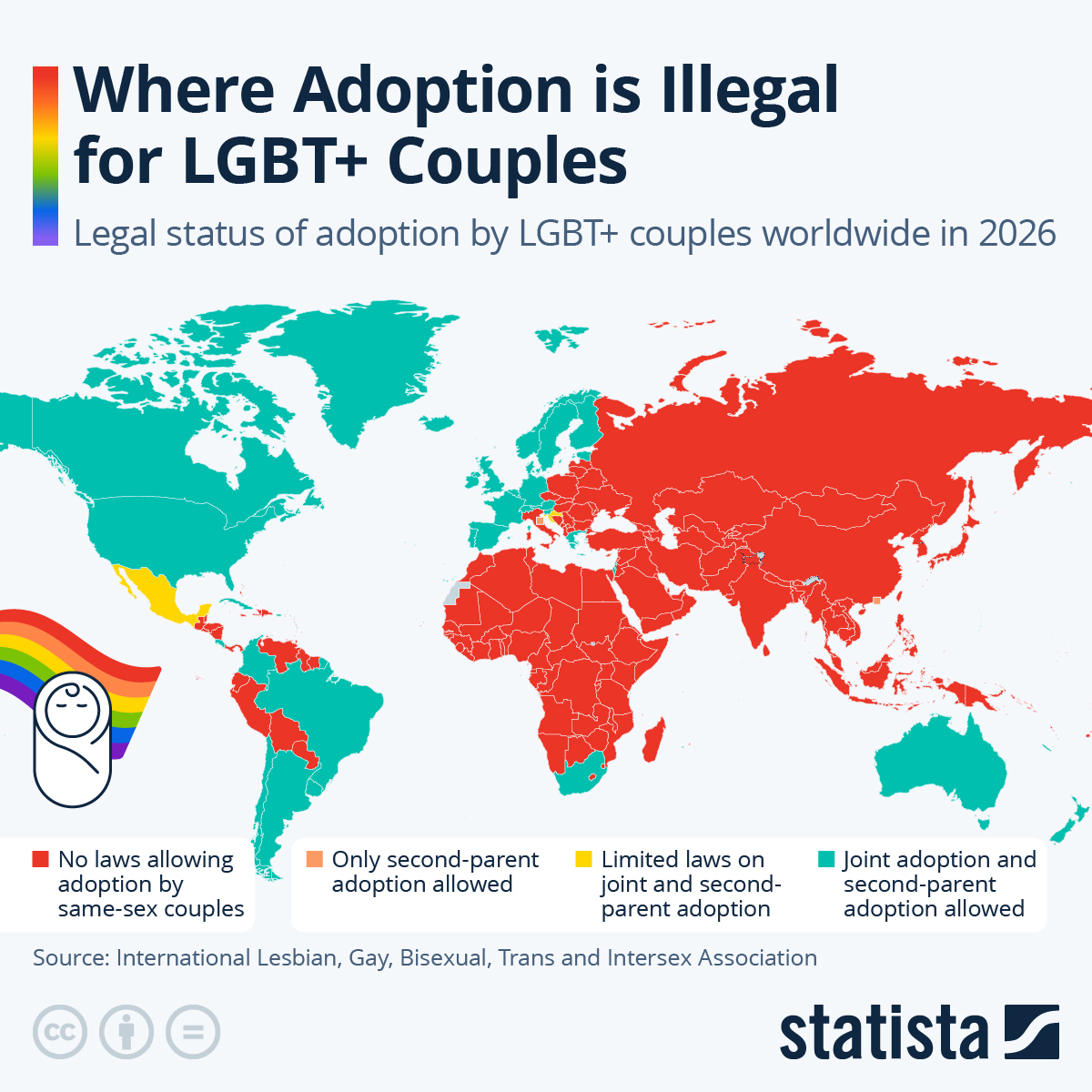
Taiwan Grants Full Adoption Rights To Same Sex Couples
37 % of LGBTQ adults live in states that recognize an intended parent as a legal parent, regardless of marital status, if they consent to the conception of a child born using assisted reproduction
63 % of LGBTQ adults live in states that only recognize an intended parent as a legal parent if they are married
Legal recognition of the parent-child relationship (parentage) is important for many reasons, from healthcare decisions and school settings to economic security, everyday life, and much more. But for both LGBTQ and non-LGBTQ people alike, families are made in many different ways, and so there need to be multiple ways for the parent-child relationship to be legally secured. These maps illustrate some of the pathways to parental recognition that are especially important for LGBTQ families.
Welcoming All Families
This map shows functional parent doctrines or policies, reflecting how some states recognize and extend parental rights to a person based on their relationship with a child, even if that person is not genetically and/or legally related to the child. This can include, for example, a person who helps raise their partner’s child, but who is not legally married to their partner or genetically related to their partner’s child. These doctrines are also commonly used for people who are related to the child, such as grandparents or other family members. Note that these doctrines can vary in important ways beyond what is shown on this map, including who qualifies as a functional parent and what potential proof or evidence may be required. This map is not legal advice, and other rights may exist. Please reach out to legal experts such as the LGBTQ Family Law Institute or legal advocates such asGLAD andNCLR.

For more information, please refer to the research of Professors Courtney Joslin and Douglas NeJaime (available by clicking Citations & More Information beneath the map legend), as well as to legal advocacy organizations, includingGLADandNCLR.
Recommended citation for this set of maps: Movement Advancement Project. Equality Maps: Parental Recognition Laws.www.mapresearch.org/equality-maps/recognition/parenting. Accessed [day of access]. Recommended citation for this specific map: Movement Advancement Project. Equality Maps: Functional Parent Recognition.”www.mapresearch.org/equality-maps/recognition/parenting/functional_parent. Accessed [day of access].
What You Need To Know About Lgbt Rights In 11 Maps
34 % of LGBTQ adults live in states that have no case law or statute recognizing functional parents, but other pathways to parental recognition may exist
Legal recognition of the parent-child relationship (parentage) is important for many reasons, from healthcare decisions and school settings to economic security, everyday life, and much more. But for both LGBTQ and non-LGBTQ people alike, families are made in many different ways, and so there need to be multiple ways for the parent-child relationship to be legally secured. These maps illustrate some of the multiple pathways to parental recognition that are especially important for LGBTQ families. All states have a marital presumption of parentage. This means that when a married person gives birth to a child, the person’s spouse is also treated as the child's parent. Because this pathway to parentage depends upon being legally married, and the 2015 Supreme Court decision in Obergefell granted the right to marry to same-sex couples nationwide, the marital presumption is available to all married same-sex couples nationwide. For more on current state marriage laws, see MAP's 2022 report:Underneath Obergefell: A National Patchwork of Marriage Laws.

See also MAP’s June 2023 report, Relationships at Risk: Why We Need to Update State Parentage Laws to Protect Children and Families , for further discussion of the importance of legal recognition of parent-child relationships, the many pathways to legal recognition of parentage, recent examples of modernized parenting laws, and policy recommendations for all states.
Poll Says Majority Of Young Americans Support Lgbt Rights
Recommended citation for this set of maps: Movement Advancement Project. Equality Maps: Parental Recognition Laws. www.mapresearch.org/equality-maps/recognition/parenting. Accessed [day of access]. Recommended citation for this specific map: Movement Advancement Project. Equality Maps: Marital Presumption of Parentage.”www.mapresearch.org/equality-maps/recognition/parenting/marital_presumption. Accessed [day of access].
0 % of LGBTQ adults live in states that do not extend the marital presumption of parentage to children born to married couples
Legal recognition of the parent-child relationship (parentage) is important for many reasons, from healthcare decisions and school settings to economic security, everyday life, and much more. But for both LGBTQ and non-LGBTQ people alike, families are made in many different ways, and so there need to be multiple ways for the parent-child relationship to be legally secured. These maps illustrate some of the multiple pathways to parental recognition that are especially important for LGBTQ families. For most children born to unmarried parents, legal recognition of parentage is established through the “voluntary acknowledgment of parentage” (VAP), a legal document typically completed at the hospital at the time of the child’s birth. There are no costs associated with it, and once it takes effect, it is the legal equivalent of a court decree of parentage and, under federal law, must be respected across state lines and in all jurisdictions. However, in many states, only men who are believed to be the genetic father of the child in question are permitted to sign VAPs. As a result, many LGBTQ families face obstacles to this pathway to parental recognition. Now, a growing number of states are updating their parenting laws to ensure that any parent—regardless of their marital status, gender, sexual orientation, or genetic relationship to the child—can sign a VAP and have their parental relationship legally recognized and protected.

Is There A Religious Right To Discriminate Against Lgbt Foster And Adoptive Parents? A Federal Court Says No.
Recommended citation for this set of maps: For this set of maps: Movement Advancement Project. Equality Maps: Parental Recognition Laws. www.mapresearch.org/equality-maps/recognition/parenting. Accessed [day of access]. Recommended citation for this specific map: Movement Advancement Project. Equality Maps: Voluntary Acknowledgment of Parentage.”www.mapresearch.org/equality-maps/recognition/parenting/vap. Accessed [day of access].
34 %

Posting Komentar untuk "Lgbt Adoption Rights America"